Monday, May 18, 2009

Post-Impressionism

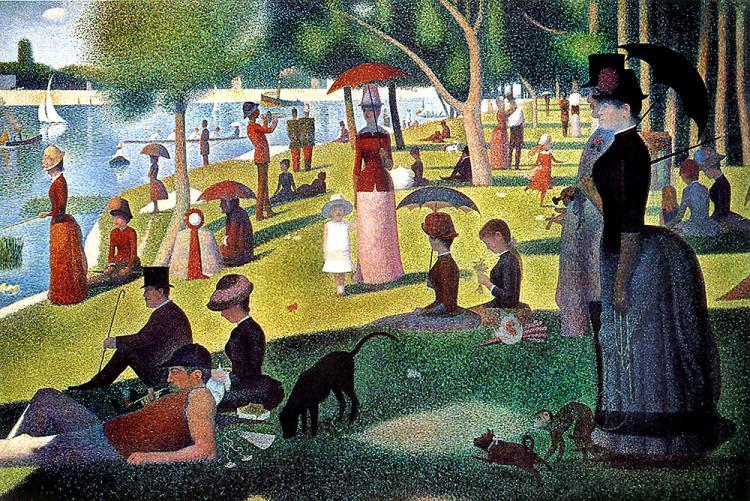
After Impressionism, the Post-Impressionism movement occurred, as the name suggests. Impressionism is very close to Post-Impressionism, for the vivid color usage, thick, swift brush strokes, and the real-life subject matter painted in a dashing method, yet Post-Impressionists used much unrealistic color as well as making the geometric forms more recognizable yet distorted. Some people argue that this artistic time was least significant of them all, while others hold it dear to their hearts. I actually like these works as much as Impressionists, yet I do not find either of them particularly interesting. They are respectable, yet I cannot fathom studying a piece all day. I cannot say I do not like all of them, but I do not fancy most of them. One painting we watched a movie about was called A Sunday Afternoon on the Island of La Grande Jatte. I enjoy the style it was created in, by a famous artist of this time, Georges Seurat, yet do not like the way the people hold themselves. I do not like the colors or the subjects, the lack of movement or pretty much anything else about it. This is why I did not like the movie, for it was all about a painting I could not enjoy as much as others.

Another famous artist during this era was Paul Cezanne. Out of the painters that I know of in this time period, I must say I take pleasure in Cezanne the most. One of his paintings is called The Card Players. I love the expressions on their faces, the colors, the brush strokes, their postures, the hint of a background, the color of the wood, popping out, almost making you smell it.

I am very flip floppy about this movement because I find many pieces I like and dislike, for the others I usually like or dislike in general. It makes it all the more difficult, yet all the more interesting.

Tuesday, May 12, 2009

NYC Class Trip

At New York, we went to the Whitney Museum and MoMA, each having a guided tour then some free time on our own. Within each tour we had a tour guide, Iway and some guy. These people made us look at certain works of art that were controversial as to whether or not they were actually "art". The first painting we discussed at the Whitney was called Woman and Bicycle by an artist named William De Kooning.

Many people cannot tell what this work is, some do not even consider it art. I believe it is art, for the artist created it for some reason. I do not particularly love the piece, yet it deserves a title as artwork. I'm not sure if it is worthy of portraying in a museum, yet who can truly say which artwork is worthy of displaying?
Another area in the Whitney we designated to an artist who got someone to print out documents from the Iraq war. While I believe this has much impact on people and should be displayed somewhere, I do not consider it this artists true artwork, for she simply printed a paper. She did not collage anything, she did not change anything, she simply thought people should read these documents so she printed them.
At the MoMA, some artwork was in question as well. One artist got a person to take a picture of him sitting on a couch with trash bags. Next, he paid a billboard painter to create theses works, yet considered them his own art. I believe the true painter of the art should get credit for the work, and the other artist should get credit for the thought.
One painting I fell in love with at the MoMA was called The Sleeping Gypsy by Henri Rousseau.

I enjoy the crisp, harsh lines, the deep and light contrasting colors, the form of the gypsy as he falls asleep with a lion behind him, wide eyed. I choose to believe the lion as a friend, for the atmosphere is cozy with a full moon tinting the sky with light and a cute, tiny musical instrument sleeping with the gypsy. I stood and studied this painting for a good six minutes, much more than the four seconds Iway said people tend to look at a painting!
And last, but not least, I discovered a culinary art in New York as I munched on the most delicious meat I have ever eaten, Lamb! The perfect ending to the perfect field trip.
Friday, May 8, 2009

Impressionism

Impressionism gave the onlooker more choice how to truly see the painting he or she was gazing at, for it was not painted clearly. Murky outlines, small dabs or spots of color made up a subject that was to be painted, giving the viewer a scene as if he or she was squinting. The subject painted was almost always what was seen, no idealism, no surrealism, simply painting and highlighting the subject usually with sunlight. No only were the brush strokes tiny, they usually were many colors blended together to get a desired effect. While it must take skill to paint something in this way, they are not my favorite genre of paintings.I actually love Renoir's work, yet cannot stand Monet's work. Odd, yet I find his art unattractive to my very soul. I tend to feel a respect for the choice of color and how the painting looks like a photograph when I squint my eyes, yet do not feel a huge bond toward this form of artwork. Monet and Renoir are probably the most known male painters at this time, yet women were beginning to get recognized as well. Cassatt was one of the few women we discussed in class. The women tend to have styles like Renoir and Monet. They must have wanted to be like the most famous, for they were the first females, it must have been intimidating. One year in high school, I went to the Philadelphia Art Museum with French club and studied the Renoir display, for he was French. I like him better than any other Impressionist I have viewed in this class. It amazes me how he became crippled by rheumatism, yet still continued to paint, this time, with the brush tied to his wrist. How difficult that must have been, yet he continued through and did what he had to do, paint. One of the paintings I enjoy by Renoir is Portrait of Claude Renoir Painting.

This painting shows who I assume is a relative of Renoir, for they share the same last name, painting. This boy has such gloss to his hair, the brush stroke illuminating, little detail, yet an "impression" is made that gives the boy certain features like the chub of his cheeks and hands. His shirt had many colors in it, harmoniously flowing together.
Another painting I enjoy is by Mary Cassatt titled, Children Playing. This chub of the children, techniques used, and style are very similar to Renoir.

Both paintings have more solid lines than Monet, which I think I prefer subconsciously. Overall, Impressionism is interesting, as my favorite artist, Dali, began as an impressionist, yet I believe artists need to grow from it and explore other areas, as they should not matter what their favorite type is, yet even more so with Impressionism.

Thursday, April 30, 2009

Caricature

Have you ever been to the boardwalk and have seen a person sitting down as another draws them. You seem a sweet child's face glowing, waiting to see the result of the artist. Peering over his shoulder, instead of seeing something that looks like the fidgety kid, it is a human-like figure with vague connections, exaggerating his poking out ears and bucked teeth, the stain on his shirt and his spiky hair? This is a caricature. While people now create them as silly face, they use to be created as political cartoons, still to laugh at, yet held much meaning. Most of the time, they would target the current ruler and point out his flaws in humorous ways, spreading truth and giggles at the same time.
Honore Daumier was a french print maker, painter, sculptor, and the first caricaturist. One work he created even put him in jail because it was so offensive to the French King at that time. This piece was called Le Charivari and portrayed the ruler as a huge, fat person eating humans and their gold as the tiny, little humans withered away in line. He is going to the bathroom, but instead of what is suppose to come out, laws and other so called "vital" documents were discarded from his rectum, obviously telling Daumier's views of this ruler.

While Daumier created many caricatures, he also created other works of art to show his sympathy for the working, loyal, diligent citizens. One of my favorite pieces I saw at the Philadelphia Museum of art was actually his painting called The Print Lover.

I love creating caricatures, whether happy or mean, they are so much fun. Today was the day we began drawing them, and as I drew my teachers head even larger than normal, I had a blast. They are quick and I am seriously considering being one of those artists sitting on the boardwalk. I will have to practice if I decide this of course, yet it is so much quick, fun, loving art. I love laughing at them too, as I placed hidden meanings in my teacher caricature he will only understand. HAHA!

Realism

Realism began in the mid 19th century when the general people were starting to move to cities. Most of these people became factory workers because of the abundance of factory jobs in the city. They were mostly poor and lived in the slum areas. The other forms of art seemed out of place, so, artists wanting to please their customers, began painting everyday scenes and events exactly as they appeared. There was no idealism here, there was a new form of art, Realism. The famous artist of Realism was Edouard Manet. He believed how he painted was more vital than what he painted. This lead him to re-create scenes that he saw in his everyday life. He created amazing textures, used line often, and put various colors in what each work called for,yet he was most known for using pattern and shape. The following picture is called Portrait of Stephane Mallarm. I enjoy the choppy brush strokes that let you see each one individually, yet as a whole, create a man.

Another artists of this time was actually the first woman artist to be recognized. Her name was Rosa Bonheur, and until her, woman were not thought of artists as highly as men were. She makes her work symmetrical, yet real at the same time. She highlights the main subjects of the painting, like in this work called Couching Lion. I love the true form of the lion and its beautiful face. The fur looks pet-able, the grass looks pick-able, the mountains look close as the others look very far away by using different tints. I love realism and think it is difficult to capture the true form of anything along with its soul, yet Rosa does in this painting quite well.

Landscape Artists

One artist in particular is credited for changing the way landscapes were created. They were no longer simply used as a background, they could be a painting in themselves. This artists name was John Constable. Instead of using quick, swift strokes to simply put the idea of a landscape behind another scene, he put much detail into the nature. He wanted to create a true re-creation of what surrounded him, so he studied the view in many different angles and changes of light. One painting he made was called The While Horse. In earlier times, a white horse would take most of the space in the painting up, yet now, it was only a part of the surrounding landscape.

Another artist of this time was JMW Turner. Instead of adding much detail, he used rapid motion to create forms and areas of color that fit together as a landscape. While Constables work is beautiful, I enjoy Turner's work more. His holds more emotion, capturing the essence of the landscape more than what was seen by the human eye. One I have in my heart is called Rockets and Blue Lights.

Romanticism

When we had to guess what Romanticism was, I believed it was simply something to do with nature, for in literature, that is what it deals with, yet I was wrong. Romanticism portrays dramatic and exotic subjects with intense feeling. I enjoy much of Romanticism and like how the picture holds much motion. The feelings blast out of the artwork, the eye cannot stop swirling around the piece, while the mind think "whoa.." One of my favorite pieces was by an artists named Théodore Géricault, it is titled Raft of the Medusa. We studied this work in class, learned how it showed true historical events. This particular piece showed the result of an incompetent sailor who took many people aboard a ship called the Medusa. He was wealth, yet did not supply enough life boats. Like the Titanic, the poor were left to drown while the rich escaped on a lifeboat. This painting shows the 15 people that survived of the 149 people left on the sinking ship. These 15 people had to do live through horror, even cannibalism. It sickens me to think of such an occurrence, yet the painting turns the rage up on a higher level.

Romantics also used diagonals, the dramatic effects of light, and kinetic energy to bind each painting together. Another artist of this era was Eugeune Delacroix. He throws motion into the pictures, letting the viewer see the figures as they move. One painting he created was called The Death of Sardanapalus. This specific one hold those semi-murky outlines, those vivid colors, those insane actions, letting the imagination continue the story he is telling.

Neo-classicism


Instead of the Baroque or Rococo styles, artists of the early 19th century decided to turn back to the classic forms of art to express courage, sacrifice, and love of the country. They wanted to bring back the Greek and Roman art characteristics, balancing compositions, harmonious contour lines, and noble gestures and expressions. While doing such, some added propaganda into their work, which means putting symbols and ideas into the work to spread to the public. I think this is genius. It is a sneaky way to sell an idea, yet no one can prove the manipulation. One artist who was particularly clever with propaganda was Jacques-Louis David. One piece in particular that thrived with propaganda was Napoleon in his Studies. This shows many things, a candle and early hour of the morning to suggest he works non-stop, vital documents beside him to show he is indeed at work, and his straight posture to signify strength.
This type of art help importance with the American and French revolutions, for the government adopted Neo-classicism as their form of art. Another famous piece by David was called Oath of the Horatti. While I do like the first painting shown better, I enjoy the symmetry of the composition. The textures and very popping as well as the positive and negative space. I do not love how the picture looks like a "still moment", like these people posed for it, yet believe it adds to the meaning of this piece. A man's sons, on the left, swear to protect and follow him and the women, to the right, weep. The father in the middle, symbolizes the government as the sons symbolize the citizens and the women show their care. The subjects of these pieces are not my choice as well, for I do not particularly enjoy politics and the government's manipulation, it is indeed amazing that they could manipulate. I do like the texture of these works, though.

Rococo


Rococo art was my least favorite art of the time period, not just because many of the pictures did not attract me, yet most of the act work was painted simply to look "pretty". Learning about Baroque Art first set the bar too high, I imagined Rococo Art to be even better, for Mrs. DeRichie pronounced it with such flare, yet i grew disappointed. This artwork seemed to show the giddy aspects of life without morals, such as The Swing by Jean-Honore Fragonard, one well-known Rococo artist. This picture is said to be a woman committing adultery with the one who her legs are open to, while her husband pushes her "in the dark". I love obscene art, yet the reasoning must be pure, I believe, not pure, but..hold some shade of grey, not be simply a woman doing wrong to her husband.
Another very famous painting is The Embarkation for Cythera by Jean-Antoine Watteau. I think some of the paintings, like this one, are fine to gaze upon, yet I d not love the very "fairy tale" aspect. I cannot help myself, I prefer things to hold fierce meaning or simple display, yet cannot truly love Rococo, for it goes against what I create art for, for a purpose, even if it is just to laugh, Rococo art seems to create to show the frivolous, care-free, only please yourself, always do what is best for number one, yours truly, and it seems to promote being very conceited and selfish, at least in my eyes.

Thursday, April 16, 2009

Baroque Art

Baroque Art is a very simple in terms of subject matter. The artists would paint ordinary scenes of ordinary people, quite different than the Renaissance art of mainly religious figures, or the earlier paintings of high class people only. Now, paintings would show ordinary peasants, a cleaning maid, meat hanging from the ceiling. These paintings were called genre paintings. The subjects would usually be placed somewhere remotely close to the middle and have light, bright colors to contrast the dark backgrounds. Some of the paintings did not even have backgrounds besides the color black or another deep tone. this was to draw the eye to the subject being portrayed, almost glowing itself. One of the most famous artists of the time was Jean-Baptise Simeon Chardin who delighted in painting average objects, showed changes of color and light, and had brush strokes that depicted the beauty hidden in a commonplace, usually with a calm atmosphere. My favorite painting by Chardin that I have seen so far has been Boy Playing with Cards. For me, this painting reminds the viewers of the good times, where one did not have a Care in the world, and could relax by completing a task with no purpose behind it. The background is one grey color, letting the boy stand out even more. His expression is relaxed and happy, yet the most amazing part of this piece are the cards and their folds. The drawer pokes out right at the onlooker, the velvet can be felt with the eyes as well as the coins, the wood, the clothing, the paper cards, the skin. Texture is my favorite element of art to capture, and Chardin does more than capture it. No even a photograph could put such clarity on those textures; it simply stupefies me.
Other artwork are architecture, holding most Baroque characteristic in the facade, or front of the building. This front holds many concave and convex curves to promote mood and drama.
As we drew our still life with certain Baroque symbols in the picture, I could not have been happier. Some symbols include bubbles to represent life and how fast death approaches, skulls to show death, and rotten fruit to show change. After drawing this, we must redraw it using oil pastels, which I have not yet mastered, so it will be a trying task. I cannot wait to test my abilities more and see the final result!

Renaissance


If someone ever calls you a Renaissance man, take that compliment with a smile. A Renaissance man was considered a jack-of-all-trades, and for a very good reason. During the Renaissance period, the artists were not only artists, but poets, inventors, scientists, engineers, sculptors, musicians, mathematicians, and many other interesting, difficult careers. The four main artists of the time period were Michelangelo,Leonardo da Vinci, Donatello, and Raphael, yet there were many other artists as well such as Durer and Botticelli. One of the main areas that holds Renaissance art is the Sistine Chapel. Michelangelo was commissioned to paint the walls and ceiling of this huge church. One painting in this chapel depicted the Great Flood that God sent amongst the sinners, only to save Noah. This painting does not hold much natural disaster, yet focuses on the human characteristics to portray their emotions on a higher level. Like other artwork form this time, the humans were painted idealized,showing off every muscle and curve. Theses people are not as idealized as the gods that were painted because they were sinners, having God's wrath shown upon them. In this particular painting, the eye is drawn to a father carying his son out of the rising ocean's depths. Not matter what is going on around them, this painting still has a sense of hope, the maybe-this-will-not-continue-to-happen sense.


Most of the artwork in this era was commissioned by churches and religious folk, therefore, most of the art held religious figures and symbols. Some were the following: the dove for the Holy Spirit and the shell for baptism and new life. One artist, Durer, was famous for beginning the self-portrait era. In our project to paint something inspired by another painting, mine was Self Portrait by Durer. This project was amazing, my favorite in the class by far. I absolutely love drawing, and it was one of the first times we were about to draw our project as apart of the result. This photo is mysterious and spoke to me, so I chose to transform it into one of my artist friends. I believe my project to be decent for the amount of time we had and the amount of effort put into it, and while I know it could have been better, I feel Durer's essence in the painting as well as my friends, which was what I was going for.

Ukranian Eggs

Ukrainian Eggs were decorated with symbols for religious purposes. The eggs were either blown by puncturing two tiny holes at both ends and blowing its' contents out, or they were left raw to dry internally, with a sand-like, shaking substance left inside. They could be given as gifts and put on display, eventually holding a tie with Easter, for the egg symbolises birth, and Christ was rose from the dead on Easter. As these eggs may look simple or complex, they hold beauty as well as meaning. Each color and symbol had an idea attached, each egg different yet the same. Colors held various meanings such as white for purity and birth, orange for endurance and ambition, and green for hopefulness and health. Many designs were placed upon the egg shell like an embattled line for containment and a meander line for harmony and motion. The pine tree represented strength, growth, and eternal life. The standing cross was a symbol of worship. The rooster represented good fortune and a life with many children. So many designs had so many different meanings, turning a mere egg into a treasure.


In class, we did not have the anticipated skill to be able to cooperate together to blow the eggs or be able to keep them whole while raw, so they were kindly boiled for us. This was a very good idea because most of them ended up breaking anyway, or being broken by an unsatisfied student. I was very interesting how we had to use bees wax, which was the funnest part. I loved the quick drying and working with bees wax. After, we would put the egg in a color that we wanted, dying all of the egg except the wax-covered part. We would repeat this process until we colored the entire egg as desired. I was unhappy with my egg, yet the process was enjoyable with the wax. I did not love waiting for the egg to dye, but patience is needed in life so I suppose it was good training for the future. While this photo of an egg is not colored as I would have done it, I enjoy the particular design on its shell.

Tuesday, March 10, 2009

Early Christian Art


Early Christian Art was similar to Byzantine Art in thought, yet the main aspect we discussed was illuminated manuscript. These were used to portray stories from the Holy Bible and were usually written in Latin. MY favorite letter, as most people would agree, is the first letter of the writing. This is because the first letter is designed exquisitely. I was very happy with the letter "S" I had to design. I made it a green woman flipping her body around and gargling (if you read my quote you will understand). In class, we chose an inspirational quote to write in calligraphy and use the first letter in design as an illuminate manuscript would. Then, we made a frame that had something to do with the quote, yet I was displeased with my resulting frame. Also, I do not have very well calligraphy skills, so it could have been much better. Over all, this project seemed simple yet was challenging and made the students dip into their mental beliefs as well as creativity. Picking the quote was just as meaningful as making the art, personalizing each piece. I used the only quote I could find that inspired me, yet most did not take Jack's words that way. I think this project was one of the most individual and self-reflective ones we have had all year and enjoyed it even though I did not enjoy my results. To do calligraphy, you need a pen and India ink, so I chose a picture of those supplies necessary. Also, the first photo displays an example of one of the many beautifully detailed illuminated manuscripts. .

Gothic Art


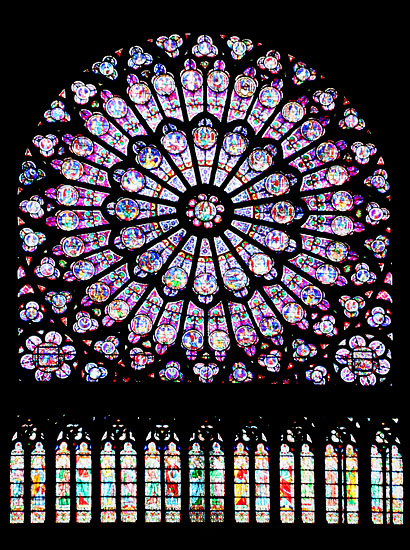
When "Gothic" comes to mind, the view is usually negative. So many think of dark, gloomy things because of the modern person labeled "Gothic", yet the Gothic art is actually vibrant and rich with color. Critics viewed Gothic Art and named it as an insult, for they believed it to be under earlier periods of art such as Roman Art. I cannot disagree more with this statement. The architecture is a step ahead, using not only pleasing visual art but more complicated math and physics as well. Cathedrals of Gothic style baffle me, simply open my mind to endless possibilities and influence. Many are in France, with flying buttresses, rose windows, and pointed tips. Flying buttresses allow a narrower support system for the walls while appearing slender and classy. Rose windows hold vivid colors of stained glass, shining through the dark that would otherwise consume. I did not particularly like making the rose windows, for not all the colors were available and I feel you can only get so creative with a window that has to hold a design instead of anything wanted, yet the results of this project was more promising than many others. I chose too display the Cathedral of Reims in France called Notre Dame of Reims, meaning Our Lady of Reims in the French language. I was in the group project that had this cathedral and remember researching the wonders it beholds. I only wish to visit one day and experience it's power. Also, I chose the main rose window from this cathedral because it is superb. I feel Gothic Art is an evolution from the previous art stage of Rome and am glad I can laugh at this name given as an insult, such closed-minded people.

Thursday, January 22, 2009

Byzantine Art


Byzantine art was influenced by the Roman empire and Greek culture. Ranging from sculpture to writing to architecture and back, Byzantine art builds it's status from mainly religion and royalty.
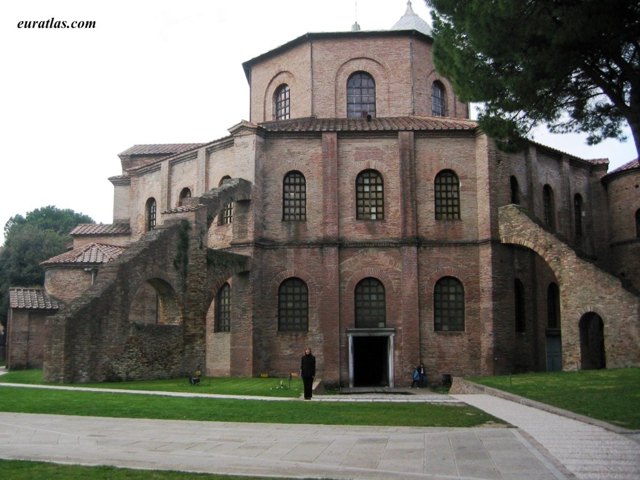
Many believe their architecture to be outstanding, mostly Christian churches such as the Hagia Sophia and Sant' Apollinare. All these churches look quite plan on the outside, with simply to complex domes, pendetives, and other geometric shapes. A dome is a circular base that usually sat upon a square, while a pendentive is a second, larger dome, with curved triangles connected to form rings and arches. Another church, by the name of San Vitale, followed the pattern of simplicity with the exterior, yet the blueprints would show different than the "normal" lay out. Instead of the circular shape, it has two concentric octagons, yet while this seems complex, the inner churches were much more of an awe-inspiring view.


Believing that the inside was more vital, for that was there praying, mass, and other Christian assemblies, the interior of the churches were highly decorative to show honor, praise, and faith. Many mosaics were used to polishes the walls of the church. A mosaic is a picture design made of tiny pieces (called tesserae) of colored stone, glass, paper, or pleasant material adhered to a surface. All of these art forms, whether mosaic, painting, or any other medium, portrayed the Christian beliefs, icons, or stories of the faiths past. Some mosaics would show rulers making offerings to Jesus, others told of tales that created such beliefs. The one below is called John II Comnenus, and his wife, Irene, with Madonna and child. This is in the Hagia Sophia.
Another featured form of art was stained glass to shine magnificently vivid colors through windows from the light of God. I enjoy stained glass the most, for you may view it differently at different times with various amounts of light each time. Although it may be the same pattern, picture, it may change viewing, more than you would imagine. At church I stare at the stained glass each mass, thinking differently toward one window at 7am mass than 10 pm mass. It just shows how many variables there truly are in art. This picture to the right portrays Christ going through the last supper, offering his body and blood for the world's salvation.